Guides
How to start a sign shop that survives its first slow season
A sign shop survives its first slow season when cash reserves, equipment leases, backlog and crew hours are planned before the calendar empties out.
What to take away
- Count the weeks, not the months. Most sign shops open into a strong stretch and meet their first dead stretch eight to fourteen weeks later.
- Work out your break-even week before you sign a lease. Fixed monthly costs divided by average gross profit per job tells you how many jobs a month keep the lights on.
- Slow months are won in busy months. Deposits, signed change orders and scheduled install dates in September are what pay February.
- Build a job board with a date on every card, so permitting and fabrication delays show up as a schedule problem while there is still time to fix it.
- Keep a maintenance and consumable reserve. Vinyl, laminate, blades, ink and LED modules get bought whether or not the phone rings.
This article covers shop operations. It is not advice on sign code, permitting, electrical work, structural attachment, employment, tax or insurance. Those answers come from your municipal building or planning department, a licensed electrician, a structural engineer, a CPA and your state insurance commissioner.
What the first slow season actually looks like
A new sign shop usually opens into a run of easy work: a few storefront panels, a vehicle or two, and banner orders from people who already know the owner. That run hides how thin the calendar is.
Cold Weather Kills Wrap Work
50 F minimum
3M IJ180Cv3 cast film guidance
Exterior wrap and laminate work thins December through March
Then the local business cycle turns. Retailers who spent their fit-out budget in spring stop calling, and contractors go quiet in the same weeks. The phone still rings, but the jobs are smaller and the quotes take longer to close.
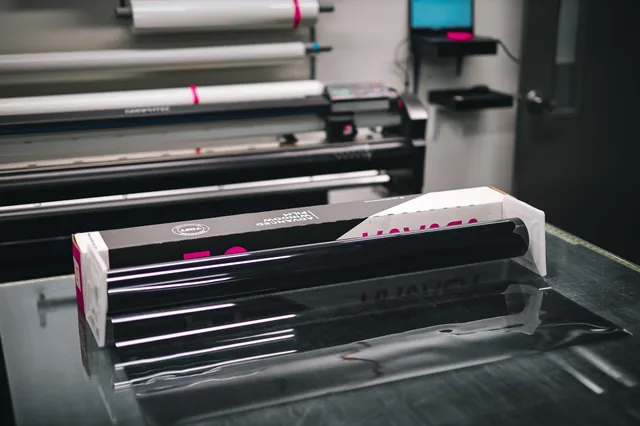
Cold markets empty out harder. 3M's installation guidance for cast films such as IJ180Cv3 puts the minimum application temperature near 50 F, so exterior wrap and laminate work in northern states thins from December through March.
The shop that fails is rarely the one with the worst work. It is the one that hired a second installer in the busy stretch, signed a bigger lease, and had nothing booked when the stretch ended.
Steps to take before opening day
- Define the operating model on one page.Write the customer types you serve, the sign types you fabricate, your service radius, shop hours, response promise and the work you decline. Say yes to channel letters, wraps, monument signs and ADA signage on day one and you have no repeatable process for any of them.
- Pick your fabrication core and rent the rest.Most independents start with a wide-format printer, a laminator, a plotter and a work table. Channel letters, routed faces and large monuments can go to a wholesale fabricator such as Gemini, Howard Industries or Steel Art until volume justifies the equipment.
- Know what the core equipment costs.A 20-inch print-and-cut such as the Roland VersaSTUDIO BN2-20A runs about $8,000 to $12,000 as of 2026. A 54-inch eco-solvent printer from Roland, Mimaki or Mutoh lands at $15,000 to $30,000. A 54-inch laminator runs $2,500 to $5,000, and a Graphtec CE7000-60 plotter around $1,800 to $2,500.
- Price from a cost sheet, not a competitor's quote.Break every quote into substrate, media, laminate, LED modules and power supplies. Then add labor hours by station, install crew hours, travel and sales tax. Add your overhead recovery and target margin on the same sheet.
- Price materials by the roll.Cast film such as 3M IJ180Cv3 and calendared film such as Oracal 651 belong on separate cost lines. A 54-inch by 25-yard roll of cast film typically lists at $450 to $700; a 24-inch by 10-yard roll of Oracal 651 sits nearer $30.
- Price labor and software on the same sheet.Shop labor commonly prices at $65 to $95 an hour and field install at $95 to $150. Estimating runs on SAi Flexi, CorelDRAW or Adobe Illustrator, with QuickBooks Online at roughly $30 to $90 a month for the books.
- Set reorder points before your first order.For each roll, sheet and module, write the quantity that triggers a reorder and the lead time from your supplier. A 54-inch roll and a 64-inch roll are not interchangeable when a job is nested.
- Buy from distributors that stock your core media.Grimco, Fellers and N. Glantz & Son ship stocked media in one to three business days in most metro markets. Special-order acrylic or custom-color vinyl can take two to three weeks.
- Open a separate reserve account.Fund it monthly with a fixed amount for blade changes, lamp and module replacement, printer maintenance kits and software subscriptions. Consumables are a cost of being open, not a cost of a job. A one-printer shop typically sets aside $150 to $300 a month.
- Confirm permitting before fabrication, every time.Ask the municipal building or planning department whether the sign needs a permit. Ask the landlord or property manager for the sign criteria in writing. A fabricated sign that fails a landlord's criteria is scrap with freight on it.
- Know which standards the sign must meet.Electric signs carry a UL 48 listing, and their wiring follows NEC Article 600. Tactile and braille characters follow section 703 of the 2010 ADA Standards.
- Verify installer credentials before the first install.Check OSHA training records and your state contractor board's licensing and insurance requirements. Electrical connection, structural attachment and lifting go to a licensed electrician, a structural engineer and a crew working to OSHA 1926. For wraps, ask about 3M Preferred Graphics Installer, Avery Dennison Certified Installer and PDAA credentials.
- Book the slow season while it is still busy.Offer existing customers a maintenance or refresh visit and quote a sign audit. Send the offer in November for February work, with a date on the calendar. Work with a date attached survives; work described as "soon" does not.
- Price the slow-season service call.A lamp and module service call typically bills at $150 to $400 per site. An annual sign audit commonly lists at $250 to $600.
How to weigh the decision
Two numbers decide whether a slow season is survivable. The first is your break-even week: fixed monthly costs divided by average gross profit per job.
Break-Even Week Math
- $9,000fixed monthly costs
- $450gross profit per job
- 20jobs needed per month
If rent, insurance, software, loan payments and base wages come to one figure and your average job carries a gross profit, the division gives the job count you need. As an arithmetic example, $9,000 a month in fixed costs against $450 of gross profit per job means 20 jobs a month. Substitute your own figures; nobody else's apply.
The second number is booked weeks forward. Count signed jobs with install dates in the next eight weeks. If that count falls below your break-even rate for two consecutive weeks, you are already in the slow season. Cut discretionary spend, do not hire.
Run both numbers monthly. They are the difference between a shop that reacts in March and one that reacted in November.
Scheduling so orders do not stall
Every job gets a card with four dates: quote sent, deposit received, permit submitted, install scheduled. Permitting is the date that slips, because it depends on a department you do not control.
Four Dates Per Job
- Quote sent
- Deposit received
- Permit submitted
- Install scheduled
A whiteboard works. So do Trello's free board or sign-shop packages such as ShopVOX and SignVox, which keep the same dates on a phone.
Fabrication starts only after the permit question is answered and the deposit clears. A job that runs long in the shop is recoverable. A job that runs long because nobody checked the sign criteria is not.
Tracking what actually brings work
Log the referral source on every quote. Sources include:
Log Referral Source on Every Quote
- Existing customer
- Drive-by
- Contractor
- Designer
- Web search
- Google Business Profile, Yelp or ISA directory
At month end, compare quotes issued, jobs won and cost per job by source.
A source that produces quotes and no wins is costing you estimating hours. A source that produces two jobs a month at full margin is worth a repeat visit.
Common questions
How much should I keep in reserve before the first slow season?
There is no universal figure, so build it from your own numbers. Add three months of fixed costs to your annual consumable and maintenance spend, then divide by the months you have before the slow stretch. That deposit is your monthly target. On the $9,000 example above, three months of fixed costs alone comes to $27,000.
Should I hire before or after the slow season?
Hire against booked weeks, not against optimism. If signed jobs with install dates cover your break-even rate for the next eight weeks, a part-time installer is defensible. If they do not, subcontract the overflow.
What is the first thing to cut when work slows?
Discretionary spend, then hours, in that order. Keep the maintenance reserve and the permitting and credential paperwork current. A shop that lets its insurance or license lapse cannot take the job that ends the slow season.
Where do I check the rules that apply to my shop?
The SBA business guide covers planning, launch, management and growth. The IRS starting a business page covers structure, tax IDs and recordkeeping. For shop-floor hazards, OSHA's printing industry pages group standards and hazard recognition by process.