Guides
Getting sign shop plan right the first time
The practical question behind 'sign shop plan' is how the decision will work during an ordinary operating day. Strong plans make assumptions visible. They state who.
What to take away
- A sign shop plan has eight parts in a fixed orderdemand evidence, service mix, startup costs, equipment schedule, permits, staffing sequence, pricing, and a 12-month cash forecast.
- Startup costs divide into four buckets. The equipment quote is one of them, and working capital covers three to six months of fixed costs.
- Confirm demand with 10 to 15 buyer interviews and one paid pilot before signing a lease.
- Settle the entity, EIN, sales tax registration, local license and sign permit rules before the first invoice.
- Hire in workload orderproduction first, installation second, customer service third.
This is general business information, not legal, tax, code or permitting advice for a specific sign, address or jurisdiction.
The eight plan sections, in order
- Demand evidencenamed prospects, competitor map, pilot results.
- Service mix: what you sell and the share of revenue each line carries.
- Startup costsequipment, buildout, deposits, working capital.
- Equipment schedulewhat you buy, lease or subcontract, and when.
- Permits and complianceentity, licenses, sign permits, waste handling.
- Staffing sequenceroles, start dates, workload per role.
- Pricingrates, minimum order, and the margin floor you refuse to cross.
- Cash forecasttwelve months, monthly, with the break-even month named.
Lenders and landlords read the plan in that order. The SBA business guide separates planning from launch, management and growth, which is a useful check against your own list. Owners who want the equipment side mapped line by line can start with this sign shop equipment checklist.
Startup cost ranges to budget
The bands below are typical for a small US shop with one printer and one cutter. Treat them as planning ranges, not quotes.
Startup cost ranges
| Item | Typical range | Note |
|---|---|---|
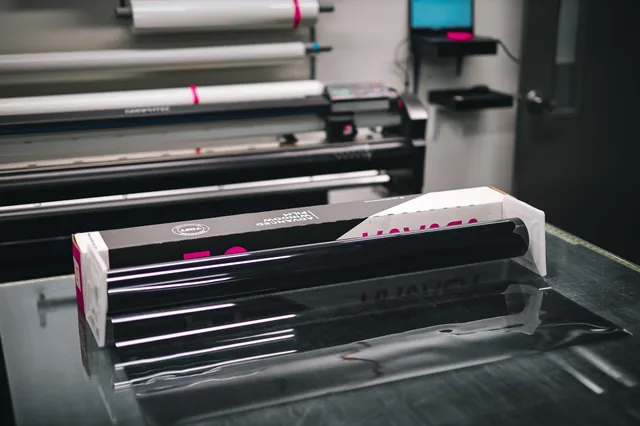
| 54 to 64 inch printer | $12,000 to $35,000 | Solvent, latex or UV |
| Vinyl cutter and laminator | $4,000 to $20,000 | Cut width drives price |
| CNC router | $8,000 to $30,000 | Often outsourced in year one |
| Buildout, electrical, ventilation | $15,000 to $60,000 | 1,200 to 2,000 sq ft |
| Delivery vehicle | $25,000 to $60,000 new | Used lowers the entry point |
| Software and subscriptions | $100 to $400 per month | Design, RIP, workflow |
Add lease deposits of first and last month plus a security deposit, insurance, and three to six months of fixed costs as working capital.
Store inks and solvents in a rated cabinet. OSHA rules on flammable liquids cover quantities, containers and handling in a production area (OSHA 1910.106).
Choosing between a new machine and a used one changes the shape of the first year, and the new versus used equipment guide sets out those trade-offs.
Permits, licensing and tax registration
Bring these forward before you sign a lease, because each one has a lead time.
- Form the entity and apply for an employer identification number.
- Register for state sales tax and any city or county business license.
- Ask the building department what a sign permit costs and who may pull it.
- Check contractor licensing rules before wiring a sign to a branch circuit.
- Set up storage and disposal for inks, solvents and rags.
The IRS walks new owners through structure and tax IDs, then through taxes and recordkeeping, at Starting a business. That sequence doubles as the compliance page of your plan.
Permit fees and inspection timelines vary by city, so get the answer in writing before you sign.
Estimating demand before you sign a lease
Interview 10 to 15 buyers and two or three referral partners. Ask what they bought last year, from whom, and what went wrong. Build a competitor map with prices and turnaround times.
Run one narrow paid pilot, such as fleet decals for a single trade. Write down the expected booking number and the earliest sign of failure. Compare qualified inquiries and bookings before and after.
If a week of pilot work will not fill at your target price, slow the lease. Owners weighing seasonality can read how to start a sign shop that survives its first slow season alongside the pilot results.
Example: a two-person shop in year one
The figures below are illustrative, not a forecast.
- Owner plus one production hire from month one.
- Service mix40 percent vehicle and fleet graphics, 30 percent building signs and channel letters, 20 percent banners and yard signs, 10 percent installation labor.
- Revenue target $260,000, gross margin 45 percent, break-even at month nine.
- Installer engaged as a subcontractor until installation passes 20 jobs a month.
- Customer service and scheduling hire at month ten.
Run the plan against ten order steps before committing: inquiry, qualification, estimate, scheduling, preparation, delivery, documentation, payment, exception handling, follow-up. A gap in any step shows up as a late job, not as a planning failure.
Order process stress test
- Inquiry
- Qualification
- Estimate
- Scheduling
- Preparation
- Delivery
- Payment
- Follow-up
Owners who want the ten steps tightened before volume arrives can read the scheduling checklist for sign shop orders.