Guides
What is actually driving demand shifts in the sign shop market?
Sign shop demand in 2027 shifts with construction permits, franchise openings, vehicle fleet wraps, and local ad spending, not with borrowed benchmarks.
What to take away
- Demand shifts in the sign shop market follow construction permits, franchise openings, vehicle fleet replacement, rebrands, and local ad spending.
- Watch local construction permits, franchise openings, and vehicle fleet replacement before any forecast.
- Channel letters and monument signs follow new commercial construction; wraps and magnetic work follow fleet and rebrand cycles.
- A 54-inch printer covers most roll work; a 64-inch machine earns its keep only when wide banners or rigid panels are routine.
- Confirm permits with the municipal building or planning department, and installer credentials with OSHA and the state contractor board.
- Track referral source, close rate, and cost per job monthly; a channel that looks strong on volume can lose money per job.
This article covers general sign-shop operations. It does not cover sign-code, permitting, electrical, or structural advice. It also does not cover legal advice. Requirements vary by sign, location, and jurisdiction.
What actually moves demand
Five forces drive sign work. Each one shows up in a different part of the order book.
Permit to sign demand
- Building permit issuedearliest signal
- One to two quarterssign demand follows
- Certificate of occupancyinstallation begins
- Channel letters, monument, pyloninstalled
New commercial construction. Channel letters, monument signs, and pylon signs are installed after a certificate of occupancy. Sign demand trails building permits by roughly one to two quarters.
The U.S. Census Bureau Building Permits Survey publishes monthly permit counts by metro. Dodge Construction Network and ConstructConnect track project starts. Your municipal planning department often uses Accela or Citizenserve for permit searches. That count is the earliest signal you get.
Franchise and multi-site openings. A franchisee opening three locations needs the same sign package three times, on a schedule the franchisor controls. One relationship can carry a year of production if you can hold the delivery dates.
McDonald's reports about 13,500 U.S. locations. Starbucks lists about 16,000 U.S. stores. Dunkin' has about 9,500 U.S. locations. Planet Fitness operates about 2,500 U.S. clubs. 7-Eleven runs about 13,000 U.S. stores. Their annual reports and franchise disclosure documents list development commitments.
Vehicle fleet cycles. Wraps, lettering, and magnetic signs follow fleet replacement and rebrand decisions. FedEx operates about 200,000 motorized vehicles. UPS runs about 125,000. Amazon has a fast-growing delivery fleet. Coca-Cola and PepsiCo run large route fleets. Replacement cycles usually run 5 to 10 years.
Ask commercial accounts when their next vehicle purchase lands. That date is your quote date.
Rebrand and refresh cycles. Ownership changes, remodels, and logo updates trigger replacements that have nothing to do with new construction. T-Mobile retired the Sprint brand in 2020 and changed store signage. Burger King and Papa John's changed logos in 2021. These jobs arrive without warning. Capacity planning matters more than forecasting.
Local ad spending and search demand. Local ad spending shifts where buyers look, and sign work follows. Borrell Associates and BIA Advisory Services publish local ad forecasts by category.
Google Business Profile, Yelp, and Nextdoor sell local visibility. When a business buys ads on those platforms, it often updates storefront, window, and vehicle signage to match.
Matching equipment to the work
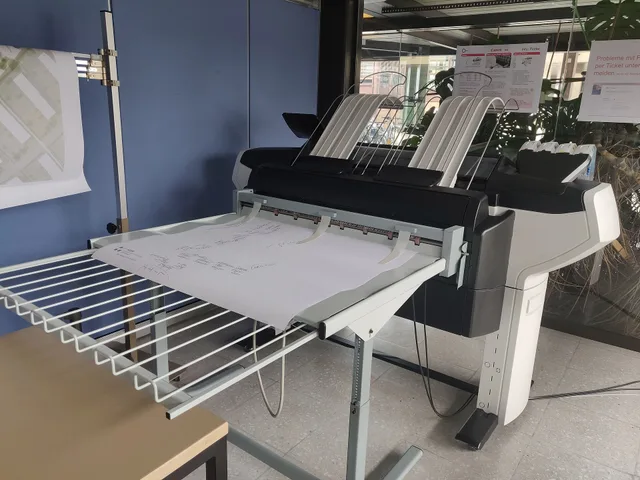
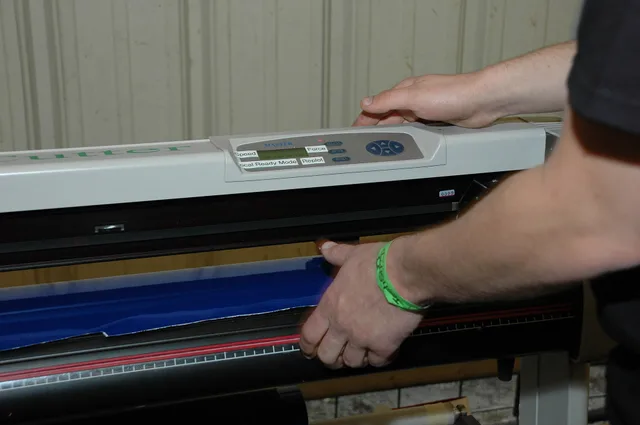
A 54-inch printer handles most roll vinyl. The 64-inch machine only pays for itself when wide banners or rigid panels are routine.
Common models include the HP Latex 700W, Roland VersaCAMM, Mimaki JV300, and Epson SureColor. Typical street prices run $15,000 to $25,000 for a 54-inch latex printer. A 64-inch machine typically costs $25,000 to $40,000.
Add a laminator before a second printer. Unprotected prints fail outdoors. A reprint costs more than the laminator did.
A CNC router earns its place when you cut acrylic, aluminum composite, or dimensional letters in-house. Brands include Multicam, ShopBot, and AXYZ. A 4x8 router typically runs $20,000 to $60,000. If you subcontract that work today, price the router against your annual subcontract total, not against the machine's sticker.
Where the customers come from
Fits a sign shop when
- Referrals from past customers
- You already have satisfied customers to ask
- Contractor and property manager referrals
- The partner sees the need before the tenant does
- Google Business Profile and Apple Maps
- The buyer searches when the need is urgent
- Yelp
- Local service searches dominate the category
- Nextdoor
- Neighborhood recommendations drive small jobs
- Repeat and retention offers
- The need recurs, especially around opening season
Weak point
- Referrals from past customers
- Slow to start
- Contractor and property manager referrals
- Dependence on one relationship
- Google Business Profile and Apple Maps
- A bad month of reviews is public
- Yelp
- Ad clicks can outrun job value
- Nextdoor
- Reach is limited by geography
- Repeat and retention offers
- Discounts train customers to wait
Track close rate and cost per job by channel. A channel with high volume and low margin is a job shop, not a customer base.
Permits, credentials, and the checks that stall jobs
A storefront sign may need a permit under local zoning. The landlord's sign criteria may be stricter than the code. Confirm both with the municipal building or planning department and the property manager before fabrication starts. A sign built to the wrong criteria is scrap.
Before fabrication starts
- Confirm local zoning permit
- Check landlord sign criteria
- Verify ICC and UL 48
- Check installer OSHA credentials
- Route wiring to licensed electrician
- Route structural work to engineer
The International Code Council publishes the International Building Code, which many jurisdictions adopt. UL 48 covers electric signs. Check those before you quote.
Verify installer credentials against OSHA requirements and your state contractor board. OSHA's printing industry resources sort hazards by process and link to standards and safety-program guidance. Wiring, structural mounting, and rigging go to a licensed electrician. They go to a structural engineer and OSHA 1926. They never go to a production schedule.
Pricing so materials, labor, and margin hold
Quote by breaking out these items:
Material cost benchmarks
- $0.50–$2.00cast vinyl per sq ft
- $0.20–$0.75calendared vinyl per sq ft
- $1.50–$4.00LED module each
- $8–$20acrylic sheet per sq ft
When a supplier quote arrives, check the unit, the yield, and the freight before you pass it through. A roll priced per square yard against one priced per linear foot is not a comparison.
Common vinyl brands include 3M, Avery Dennison, Oracal, and Arlon. Cast vinyl typically runs $0.50 to $2.00 per square foot. Calendared vinyl runs $0.20 to $0.75 per square foot.
LED modules from Principal LED, SloanLED, and US LED typically cost $1.50 to $4.00 each. Acrylic sheet runs $8 to $20 per square foot. Substrates from Nudo and Gemini are common for letters.
Set reorder points for vinyl rolls, acrylic sheets, and ballast, then count monthly against shrinkage. A job that stalls on a missing ballast costs more than the inventory carrying it.
The monthly review
Once a month, look at quality, capacity, and cash together. That review shows whether a change improved the operation or only moved work elsewhere. A written sign shop plan keeps demand, capacity, and pricing assumptions visible before the team commits.
Before expanding, test how sign shop expansion changes staffing and cash. Start with a limited pilot and write down the expected result and the earliest sign of failure.
For market research, the SBA business guide covers ownership, market research, permits, and finance. The BLS occupational wage tables publish employment and wage estimates by occupation and metro area, one input when reviewing local compensation.
Common questions
What is the single best demand signal for a sign shop?
Building permit activity from your municipal planning department. The U.S. Census Bureau Building Permits Survey publishes monthly counts by metro. Sign work trails certificates of occupancy by one to two quarters, so permit counts give you a head start on channel letter and monument sign demand.
Should I buy a 64-inch printer or a 54-inch?
Buy the 54-inch unless wide banners or rigid panels are routine work. The wider machine costs more per print and ties up floor space. A laminator protects outdoor prints and pays back faster.
How do I check a sign permit before quoting?
Call the municipal building or planning department and read the landlord's sign criteria. Both can be stricter than the code, and a sign fabricated to the wrong criteria cannot be salvaged.
What should I track monthly?
Referral source, close rate, and cost per job by channel. Also quality, capacity, and cash. Volume without margin means a channel is buying work rather than earning it.
Do local ad platforms drive sign demand?
Yes. Google Business Profile, Yelp, and Nextdoor change how buyers find local services. When a business increases spending there, it often updates storefront, window, and vehicle signage to match. Borrell Associates and BIA Advisory Services track those local ad categories.