Guides
Planning a sign shop expansion around capacity
Plan a sign shop expansion by matching added capacity to the bottleneck, then account for equipment, permits, inventory, staffing, and marketing.
What to take away
- A sign shop expansion should start with the bottleneck, not a new market. A second router, a second shift and a second location solve different problems. Name the bottleneck before you price any of them.
- Quote the expansion job the way you quote a signsubstrate, vinyl, LED modules, labor hours, crew time and sales tax, each on its own line.
- Check zoning, landlord sign criteria and installer credentials before you sign a lease, not after the first channel letter is built.
- Track referral source, close rate and cost per job monthly. A new market that closes at half your current rate is not growth.
- Set reorder points for vinyl rolls, acrylic sheets and ballast before a big install season drains stock mid-job.
This article covers shop operations, not code compliance. Electrical work, structural mounting and crane or rigging safety belong to a licensed electrician, a structural engineer and OSHA 1926. Permit requirements belong to your municipal building or planning department.
Start with the bottleneck, not the market
Expansion fails when it adds capacity the shop already has and starves the step that was actually slow. Watch where jobs sit. A quote that waits three days for a proof is a prepress problem. A finished sign that waits two weeks for a crew is a scheduling problem.
Spare Capacity Arithmetic
- Jjobs completed per week
- Hcrew hours per week
- hhours per job
- (H ÷ h) − Jspare capacity
Write down the step where the most jobs queue, the hours they wait there, and who owns that step. If the answer is "everything is slow," the shop is understaffed, not under-equipped. Fix that first.
Here is the arithmetic in variables you fill in:
Start with the bottleneck
- Current weekly output = jobs completed per week (J)
- Hours available at the bottleneck = crew hours per week (H)
- Hours a job needs at the bottleneck = (h)
- Spare capacity = (H ÷ h) − J
If spare capacity is near zero, one more sales push will not help. Add hours, people or equipment at that step, or raise price to slow demand.
Pick the format that matches the constraint
Each expansion format buys a different thing. Match it to the bottleneck you found.
Expansion Format vs Bottleneck
Format
- Second shift
- Machine hours owned
- New equipment
- Capacity plus payment
- Second install crew
- Field hours, vehicle
- Satellite shop
- Travel time saved
- Acquisition
- Customers, staff, equipment
What it adds
- Second shift
- Print or routing
- New equipment
- One machine queues
- Second install crew
- Installs back up
- Satellite shop
- Work sits far
- Acquisition
- Absorb backlog
Typical fit
- Second shift
- New equipment
- Second install crew
- Satellite shop
- Acquisition
What it actually adds
- Second shift
- Machine hours on equipment you own
- New equipment
- Capacity at one step, plus a payment
- Second install crew
- Field hours, vehicle and insurance cost
- Satellite shop
- Travel time saved, duplicate overhead
- Acquisition
- Customers, staff and equipment at once
Typical fit
- Second shift
- Bottleneck is print or routing, not sales
- New equipment
- One machine is the queue every week
- Second install crew
- Fabrication is fine, installs back up
- Satellite shop
- Most work sits far from the main shop
- Acquisition
- You can absorb someone else's backlog
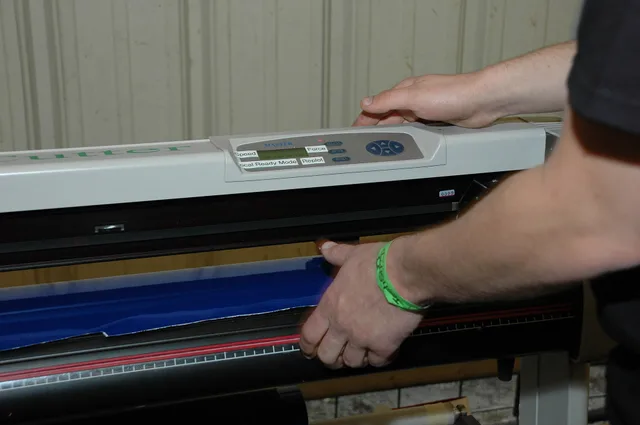
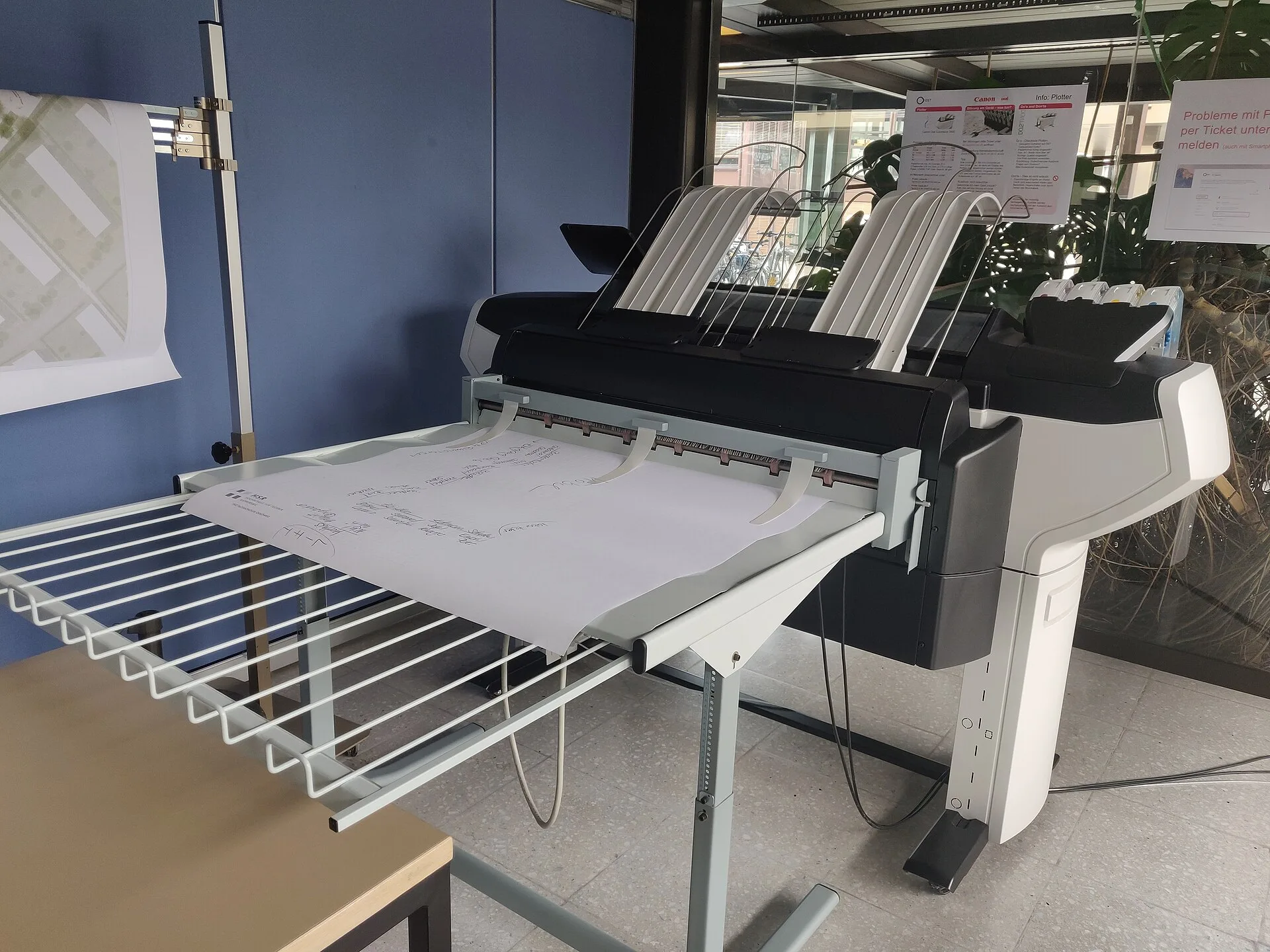
A 54-inch printer and a 64-inch printer are not interchangeable. The wider bed cuts panel seams on large faces and reduces labor per square foot, but it costs more per roll of media and takes floor space you may not have. Price the difference in labor hours saved, not in machine specs.
Price the expansion like a job
Build the expansion quote the same way you build a sign quote. Substrate, vinyl, LED modules, labor hours, installation crew time and sales tax each get a line.
Expansion Quote Line Items
- Substrate
- Vinyl
- LED modules
- Labor hours
- Install crew time
- Sales tax
- New machine payment
- Extra vehicle
Then add the lines a job quote never has: the new machine payment, the extra vehicle, the second crew's insurance, the added square footage, and the working capital that sits in inventory and receivables while the new work ramps.
Contribution per job = price − materials − direct labor − install crew − sales tax collected and remitted. Shared overhead does not belong in that line. It belongs in the monthly figure you must cover.
Do not count new capacity as fully used on day one. Run the arithmetic at half utilization and see whether the shop still covers its fixed cost. If it only works at full capacity, the plan has no room for a slow month.
Permits, credentials and the landlord
A storefront sign usually needs a permit, and the rule that applies is local. Zoning, historic district rules and the landlord's sign criteria can each block a design that a customer already approved.
Ask the municipal building or planning department what the property allows before design starts. Ask the landlord for the sign criteria in writing. Read both against the customer's drawing.
Installer credentials are separate. Verify against OSHA training requirements and your state contractor board rules. Do not send a crew up a ladder or a lift on the strength of a verbal assurance.
For general business planning, licensing and finance structure, the SBA business guide covers the sequence of planning, launch and growth steps.
For local wage data when you build a staffing plan, use the BLS Occupational Employment and Wage Statistics tables, which publish estimates by occupation, industry and metro area.
For shop-floor hazards in printing and coating, OSHA's printing industry page links standards, hazard recognition and ergonomics guidance.
Inventory and reorder points
Vinyl, acrylic, LED modules, ballast and fasteners all have lead times. A big install season empties a shelf faster than a reorder arrives.
Reorder Point Formula
- (avg daily use × lead time days) + safety stockreorder point
- monthlycount against system figure
- gap by itemshrinkage written down
Set a reorder point for each item: reorder point = (average daily use × lead time in days) + safety stock. Safety stock covers the week a supplier ships late.
Count monthly against the system figure. Shrinkage in a sign shop is usually offcuts that never got logged, damaged sheets, and vinyl rolls that sat past their usable life. Compare the count to the book number and write down the gap by item.
Do not stock a substrate you use twice a year just because it was on sale. That is cash sitting on a rack.
Marketing that shows which jobs pay
Track where each job came from. Sources include referrals, repeat customers, vehicle wraps seen on the road, and Google. Also track general contractors and walk-ins. Then track close rate and cost per job by source.
Cost per job = (ad spend + sales hours × loaded rate) ÷ jobs won from that source. Run it monthly. A source that brings many quotes and few wins is expensive even when the ad spend looks small.
A limited pilot beats a full launch. Pick one new segment, run it for a quarter, and write down the expected close rate and the earliest sign it is failing. Compare close rate, average job size and gross margin against the existing mix. Then decide whether to expand, revise or stop.
Common questions
How do I know if I need a second location or just a bigger shop?
If most jobs are within a short drive and the queue is at a machine, a bigger shop or a second shift is cheaper. A second location pays off when travel time is the constraint and the new area has enough demand to carry its own overhead.
What should I check before signing a lease for a satellite shop?
Check zoning for your use, the landlord's sign criteria, power available at the panel, ceiling height for a lift, and truck access for deliveries. Confirm the address can hold your equipment before you commit to the term.
How do I price a wrap or channel letter job so margin holds?
Break the quote into substrate, vinyl or LED modules, labor hours, install crew time and sales tax, then add your margin on top of the total. If you cannot name each line, you are guessing at the price.
What numbers should I review every month?
Review jobs completed, hours at the bottleneck, and close rate by source. Review cost per job, inventory count against book, and cash on hand. Six numbers, checked monthly, catch most expansion problems early.