Guides
ADA Sign Requirements: What to Check Before a US Sign Shop Quote
ADA sign requirements for businesses: follow 2010 ADA Standards and DOJ rules. Check tactile text, contrast, mounting height, and state codes.
What to take away
- ADA sign rules come from the 2010 ADA Standards for Accessible Design and are enforced by the U.S. Department of Justice.
- A compliant tactile sign must have raised characters, Grade 2 Braille, and a non-glare finish with proper contrast.
- Mounting heights differ for tactile characters and visual-only characters.
- Texas and Florida add state-level rules that can catch a sign shop or buyer who relies on federal rules alone.
ADA sign requirements for businesses start with the 2010 ADA Standards for Accessible Design. The U.S. Department of Justice uses these standards to enforce Title III. The DOJ investigates complaints and can bring lawsuits. Private individuals may also sue under the ADA.
A business found in violation may be ordered to remove and replace noncompliant signs, pay civil penalties, and cover the government's attorneys' fees. The U.S. Access Board's Chapter 7: Signs guide covers key dimensions and exceptions. For broader DOJ resources, the ADA topics page links to enforcement guidance.
Before quoting, many shops also check what sign permits the local authority requires, because a permit condition can affect sign size or placement.
What a compliant ADA sign carries
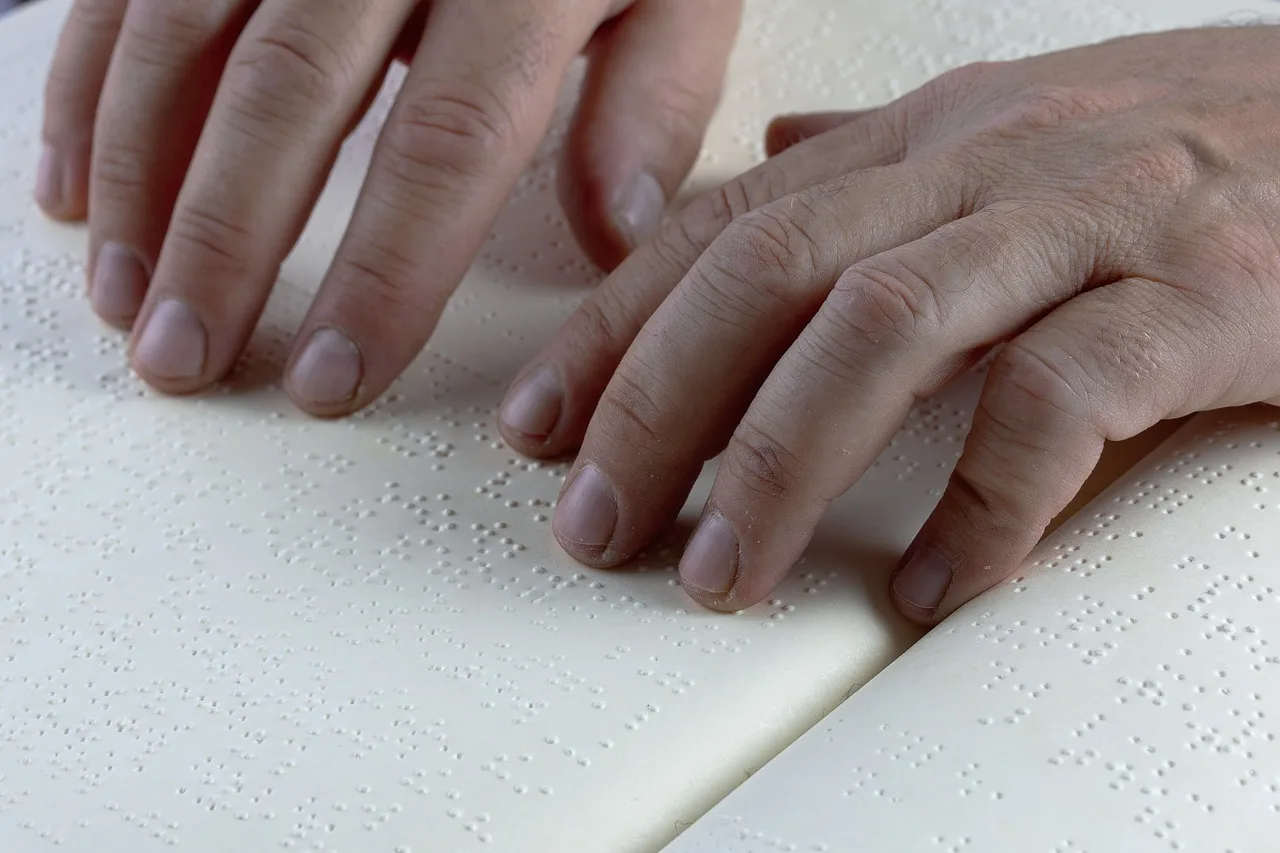
A compliant tactile sign has raised characters between 5/8 inch and 2 inches high, Grade 2 Braille below the raised text, and a non-glare finish. Braille must be separated from raised characters by at least 3/8 inch, and the dots must be domed or rounded. The characters and background must have a high contrast, which the standards define by light reflectance value rather than color. If the sign identifies a permanent room or space, it needs tactile characters unless the room is exempt. Visual-only signs, such as directional signs, do not need Braille but must still meet character height and contrast rules.
Tactile vs Visual-Only Signs
Tactile permanent room signs
- Raised characters
- Yes
- Grade 2 Braille
- Yes
- Non-glare finish
- Yes
- Contrast
- Required
- Mounting baseline
- 48–60 inches
Visual-only directional signs
- Raised characters
- No
- Grade 2 Braille
- No
- Non-glare finish
- No
- Contrast
- Required
- Mounting baseline
- 40 inches min
These dimensions keep signs readable for people who are blind or have low vision. When a buyer compares quotes, the method behind price a job can show whether ADA compliance costs are built in.
Mounting heights and placement
For tactile characters, the baseline of the lowest tactile character must be at least 48 inches above the floor. The baseline of the highest tactile character must be no more than 60 inches. Visual-only signs, such as those directing people to an exit, must be at least 40 inches above the floor to the baseline of the lowest visual character. A sign mounted outside this range can fail an inspection even if the sign itself is otherwise correct.
ADA Sign Mounting Heights
- 48 incheslowest tactile character baseline
- 60 incheshighest tactile character baseline
- 40 incheslowest visual character baseline
For installation work that requires a lift or electrical changes, the rules around sign installer hiring matter. ADA sign mounting must be done by someone who follows both OSHA and state contractor rules.
Texas and Florida examples
Texas uses the Texas Accessibility Standards, which incorporate the 2010 ADA Standards but are enforced by the Texas Department of Licensing and Regulation. A Texas sign shop buyer in Houston or Dallas should confirm whether the project is subject to a registered accessibility specialist review before the sign is fabricated. If a new building fails a TDLR inspection because a restroom sign lacks Braille or is mounted too high, the certificate of occupancy can be delayed.
Florida enforces the Florida Accessibility Code for Building Construction, which mirrors the 2010 ADA Standards for most signs.
The Florida Department of Business and Professional Regulation can issue a stop-work order or fail a final inspection if an accessibility sign violates the code.
A sign shop in Miami or Tampa should ask whether the local building department requires a separate accessibility plan review before installation.
Some owners run their own quality checks after installation, including measuring character height and Braille dot spacing.
Exceptions and common failures
Some signs do not need tactile characters, such as temporary signs, building directories, and menus. A restroom sign is almost never exempt. Inspectors often catch signs with Braille positioned too far from the raised text, or with characters placed below the 48-inch baseline.
Common ADA Sign Failures
- Braille too far from raised text
- Characters below 48-inch baseline
- Tactile sign mounted at 45 inches
- Installer measured to sign center
- Site measurement rushed
The most frequent field failure is a tactile sign mounted at 45 inches because the installer measured to the center of the sign instead of the character baseline.
Even a sign shop with a good fabrication process can miss this if the site measurement is rushed.
Questions to ask before you commit
- Does the sign identify a permanent room or space, such as a restroom, stairwell, or mechanical room?
- Will the sign be mounted with tactile characters between 48 and 60 inches from the floor to the character baseline?
- Does the state or city require an accessibility review before the sign is fabricated, as Texas and Florida do in many cases?
- Does the sign shop provide a compliance drawing that shows character size, Braille placement, and mounting height?