Guides
Dallas-Fort Worth sign fabrication, why low rents and small-business growth matter
DFW sign fabrication runs on cheap industrial bays, steady small-business formation and city-by-city permit rules that decide who may install.
What to take away
- Industrial space across DFW typically asks $8 to $12 per square foot on a triple net basis, against roughly $20 to $35 in Los Angeles and New York.
- Texas licenses electrical sign contractors through TDLR. It issues no statewide sign installer license.
- Dallas, Fort Worth, Irving and Plano each publish their own permit fees and review times. Typical reviews run 5 to 15 business days.
- Rent is not the whole bid. Coastal labor rates and inbound freight decide whether the advantage holds.
- Group installs by corridor. Moving a crane truck twice across the metroplex costs more than the rent saved.
Why industrial rent decides how much bay a shop can afford
Fabrication needs floor space, three-phase power and a roll-up door. Industrial asking rents across DFW have typically sat between $8 and $12 per square foot on a triple net basis.
Coastal markets ask far more. Typical asking rents run $20 to $35 per square foot in Los Angeles and New York. The same monthly check buys two or three times the bay in Grand Prairie or south Dallas.
More bay becomes a welding area, a paint booth and assembly tables. Cheap space also lowers the cost of holding aluminum sheet, acrylic and LED modules.
Read the lease, not the headline rate. Many DFW industrial leases are triple net, so the tenant pays taxes, insurance and maintenance on top of base rent.
Clear height and service size decide what leaves the door. Thirty feet of clear height and a 400 amp service support pylon cabinets. A smaller shop runs channel letters on single-phase power and a spot welder.
Distance is the other half of the trade. The cheapest bays sit in outlying parks, far from the retail corridors where clients are. Weigh that rent against delivery miles before signing a five-year lease.
Small-business formation sets the work mix
Texas keeps adding businesses, and DFW leads the state. Each new LLC needs a storefront sign, vehicle graphics or a monument panel at the office park.
The mix shifts by submarket. Frisco and Plano add clinics and corporate offices that buy lobby and ADA signage. South Dallas and Grand Prairie add warehouses that buy pylon panels and wayfinding.
Read your own ZIP codes before buying capacity. A shop that knows which work arrives locally plans its floor around that mix instead of a wish list.
New businesses buy in stages. A tenant opens with a banner, then orders channel letters after the lease is signed. Track those stages and repeat revenue follows.
Who may legally install in Texas
Texas issues no statewide sign installer license. Cities and counties control signs through permits, zoning and electrical rules. The legal right to install depends on the work and the jurisdiction.
Illuminated channel letters and pylons fall under electrical contracting rules. The Texas Department of Licensing and Regulation licenses electrical sign contractors. That license holder pulls the electrical permit and signs off on the connection. The National Electrical Code, NFPA 70 sets the branch circuit and disconnect rules the electrician must meet.
Unlicensed work can fail inspection and void a warranty. Confirm the license before the crew arrives. Your installer hiring rules checklist should verify TDLR status, insurance and safety training.
Structural work follows the International Building Code, which many Texas cities adopt. Wind load matters across the metroplex, so engineers often stamp drawings for tall pylons and monuments. ADA rules govern accessible signage at parking and entries.
Permit fees and review times in four cities
Fees and timelines shift by city, so keep a matrix. The ranges below are typical planning figures only. Confirm current numbers with the authority having jurisdiction, because schedules and valuations change.
Permit fees and review times
| City | Typical sign permit fee | Typical review | Extra review triggers |
|---|---|---|---|
| Dallas | $100 to $450 | 5 to 15 business days | Illuminated signs, historic districts |
| Fort Worth | $75 to $400 | 5 to 10 business days | Pylons, engineered foundations |
| Irving | $100 to $500 | 7 to 15 business days | Height variances, tenant panels |
| Plano | $125 to $500 | 10 to 20 business days | Monument signs, corridor overlays |
Electrical permits are separate and usually cost less than the sign permit. An engineer stamp, where required, adds a few hundred dollars and about a week.
File the sign permit before fabrication. The sign permits before fabrication sequence explains why a stamped drawing sometimes arrives after the material order. New owners can also start with SBA guidance on licenses and permits.
Fabrication workflow in a low-rent bay
Fabrication workflow
- Survey and permit. Measure the site, check easements and wind exposure, then file with the city. Line up the electrical contractor for illuminated work.
- Design and engineering. Produce shop drawings, obtain the engineer stamp where required, and release material orders. Acrylic, aluminum and LED modules carry lead times.
- Fabricate. Cut and weld the frame, form the can, route the face, wire the LEDs and paint.
- Assemble and test. Bench-test illumination, seal the cabinet and stage the sign for transport.
- Install. Deliver, set the anchor or foundation, connect power and pass inspection.
Good operations and workflow keeps those steps from colliding. Schedule fabrication before the permit issues and you risk building a sign the city will reject.
Example: a three-tenant pylon in Arlington
A 24 foot pylon typically follows this clock. Survey and permit take about two weeks. A stamped foundation drawing adds a week. Fabrication runs three weeks in the bay for cabinet, faces, wiring and paint. Installation takes one day with a crane and an electrician on site.
Fabricated and installed cost for that size typically lands between $15,000 and $30,000, depending on faces and electrical scope.
Installation logistics across the metroplex
A job in Frisco can sit an hour from a shop in south Dallas. Route planning is a cost center, not an afterthought.
Group installs by corridor. One crew with the right equipment beats a second trip. A crane truck and a bucket truck are expensive to move twice.
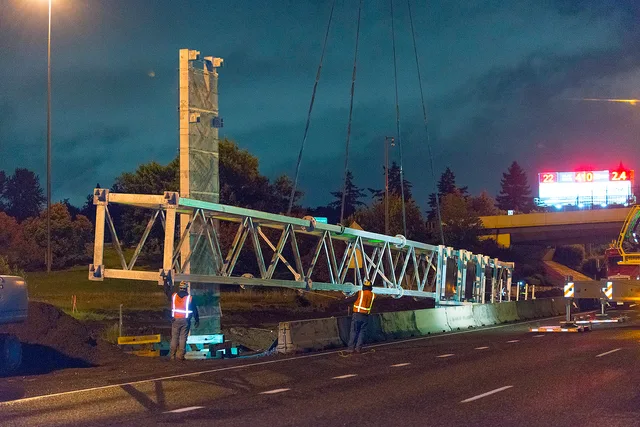
Crew size follows the sign. A single-face monument goes up with two installers. A pylon taller than 30 feet needs a crane operator, a spotter and an electrician on site.
Permit windows constrain the schedule. Some cities allow installation only during set hours, and retail centers restrict daytime work.
Self-performing high work is a safety and insurance decision. OSHA's fall protection standard for construction sets the trigger height and the equipment a crew or subcontractor must carry.
What DFW bids include against coastal costs
DFW bids against coastal costs
Typical DFW range
- Industrial rent
- $8 to $12 per sq ft triple net
- Installer or fabricator wage
- $22 to $30 per hour
- Freight on acrylic and LED modules
- $150 to $400 per shipment
Typical coastal range
- Industrial rent
- $20 to $35 per sq ft triple net
- Installer or fabricator wage
- $35 to $55 per hour
- Freight on acrylic and LED modules
- $75 to $250 where local suppliers exist
Lower costs do not mean lower prices. Clients pay for code compliance, engineering and finish quality. A shop that competes only on price leaves money on the table.
The rent gap is wider than the labor gap. Labor is a bigger share of an installation-heavy bid, so the coastal penalty lands hardest on jobs with crane time and electrical work.
Anyone weighing a coastal move should read New York City rents and permits before assuming a higher rent means higher revenue.